Which Career Body Are You - MAC152
Episode · 0 Play
Episode · 18:18 · Aug 4, 2026
About
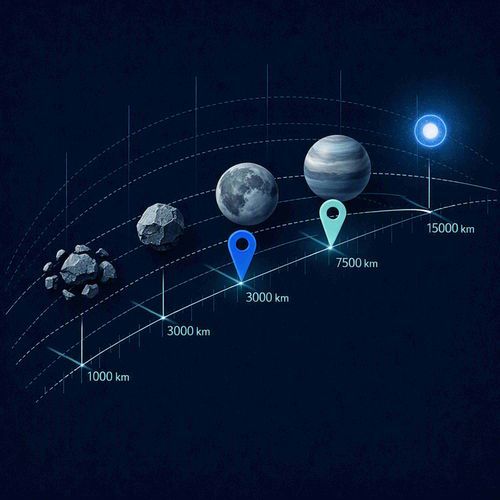
A while back I walked an entire arc, start to finish. Rock to star. How influence accumulates inside an organization, how far it reaches, and exactly where it stops reaching. And I never once told anyone where they were standing on it.That is the unfinished business here. But I want to close it in a way that survives contact with the one thing that wrecks every self-assessment ever written — the person doing the assessing.So this is two things stacked on each other. The first is an instrument: five positions, the honest tells for each, the trap that catches people there, and one move that adds mass. The second is the part most self-assessments skip — what to do about the fact that you are a poor judge of your own position, and that the direction of your error is worth more than the reading itself.The arc, in about sixty secondsIn From Gear to Field (MAC-143) I borrowed a piece of physics to describe how influence actually behaves. Your pull inside an organization comes from two things and only two things.The first is mass — everything you have accumulated. Problems solved. Commitments kept. People developed. Trust earned, and trust kept after it was earned. The second is proximity — the fact that your pull is strongest on the people closest to you and falls off hard with distance. Not gently. Hard.Put them together and you get an arc with five positions on it.Early on you are a loose cluster of rock. Nothing orbits you and you are not trying to make it. You are getting denser, which is the entire job at that stage.Compact that cluster enough and you become an asteroid — a single body, heavy enough that the things nearest you start to feel your pull whether you intended it or not.Keep going and the asteroid becomes a moon, settling into orbit around something larger, carrying enough mass to raise tides across a body far bigger than itself.Keep going and you become a planet, and now things orbit you.And at the far end, a star. Mass so great it bends light.That is the arc. Five bodies. And the most important thing to say before going further: none of those bodies is a job title.Titles are the wrong instrumentThere is a body of research career people have cited for decades — the Four Stages of Contribution, from Gene Dalton and Paul Thompson. The finding is that people move through four stages of organizational contribution, and the variable separating those stages is not seniority. It is the size of the cross-section of the organization a person actually affects.Here is the part worth stopping on. A large share of the people operating at the top stage in that research hold no management title at all. The highest-contribution people were frequently individual contributors. No direct reports. No box on the org chart with lines coming out of it.Which means the org chart is not the instrument. It never was. It maps reporting relationships, and those are a small subset of how influence moves.So if the title does not tell you where you are, what does?Other people's behavior.Not your effort. Not your seniority. Not how you feel walking out of a meeting. What actually changed in someone else because you exist.That is the rule underneath everything that follows, and stating it before the list is what disciplines the list. Every tell below is something a colleague could confirm without you in the room. If a tell requires your own testimony to be true, it is not a tell. It is a hope.The ClusterYou are a loose collection of accumulating rock.The tells: nothing in the organization reroutes because of you. When you are out for a week, the work waits for you, but nobody changes their plan. Your calendar is almost entirely made of your own deliverables.The trap here is the cheapest and most common one on the whole arc — mistaking motion for mass. Working extremely hard, producing constantly, and accumulating nothing that outlasts the sprint. High activity, low movement. An executive coach writing about why so many people are operating in the wrong career stage without knowing it named the mechanism: the frustration does not come from insufficient effort, but from spending real effort on the wrong stage's behaviors.The move: finish one thing that keeps working after you stop touching it. A process. A document. A fix that stays fixed. This is the Work versus Job distinction from Eliminating Work, Not Jobs (MAC-138) showing up at the very bottom of the arc — tasks burn off, and the value is whatever stays behind. Mass is the residue work leaves. Output that evaporates on Friday was motion.The AsteroidA single body, dense enough that its gravity finally reaches the rocks nearest it.The tells: people on your immediate team check with you before they commit to something, and nobody told them to. Your standard has quietly become the team's standard. Someone repeated your phrasing in a meeting you were not in.The trap is reading local pull as organizational reach. Your gravity is real. It just does not extend past the people who sit closest to you, and the inverse square law is unforgiving about that. Two rings out, you are not weak. You are absent."Asteroid" sounds like a demotion and it is not. Practitioners who study how influence works for people with no formal authority have been making the same point for years — in flatter, more cross-functional organizations, informal influence is the primary mechanism, not the consolation prize. Being an asteroid means you generate genuine pull. It simply has a radius.The move: solve one problem that belongs to a team that is not yours. Not a favor — a problem. If you built an exposure map back in Manufacturing Serendipity (MAC-147), you already know which department has the biggest hole in it. Start there. That is how mass begins registering at distance.The MoonYou have left the loose rubble behind and settled into orbit around something larger than yourself — a function, a mission, a leader.The tells: you get consulted on decisions outside your formal scope. Your name comes up in rooms you are not in, attached to a domain. When you push back, plans change.This is the longest-occupied position on the arc, and it carries the subtlest trap on it. Being inside a system feels almost exactly like shaping it. You are invited, respected, genuinely wanted in the room — and none of the agendas are yours. A moon raises tides across an entire ocean. It does not pick the ocean.People spend years on the wrong side of that line without noticing, because the wrong side is pleasant. Being asked is pleasant. Neither one is the same as setting the terms.The move: take ownership of a question, not an answer. That is The Question Is the Credit (MAC-151) arriving at the exact spot on the arc where it does the most work. Reframing the problem is how a moon stops responding well to somebody else's agenda and starts setting one item on it.The PlanetNow things orbit you. People, priorities, and decisions settle into stable paths around your gravity.The tells: other people's plans assume you before they consult you. Your absence from a decision is treated as a problem to solve rather than a detail to note. You spend more of your week on other people's work than your own.The trap is mistaking stable orbits for permanence. Orbits are maintained, not achieved. This is where the Leadership Pipeline model — Ram Charan, Stephen Drotter, and Jim Noel — earns its keep, because it is explicit that a passage is not complete when the title changes. It completes when the work, the time allocation, and the values change. Most people who stall as planets are still allocating their hours like the body they used to be.The move: audit where your hours actually went last week. Not where you meant to spend them. If the majority went to work only you could do, you are a very busy asteroid sitting in a planet's chair.The StarMass so great it no longer just holds things in orbit. It bends light.The tells: the temperature of a room changes before you speak. People make decisions based on what they think you would want, they are usually right, and you were never consulted. Your judgment is being applied by people you have never met.The trap at the top looks like ambition, which is why nobody...
18m 18s · Aug 4, 2026
© 2026 Libsyn