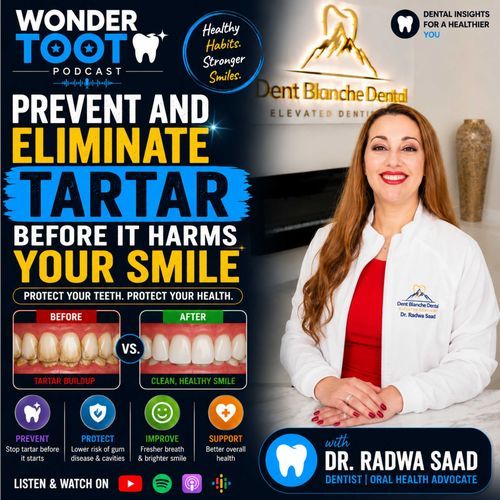
Prevent and Eliminate Tartar Before It Harms Your Smile
Episode · 0 Play
Episode · 19:17 · Aug 20, 2025
About
How to Get Rid of Tartar | The Wonder Tooth PodcastBrushing every day is important. Flossing matters too. But even patients with good habits can still develop tartar buildup. Once tartar forms, your toothbrush cannot remove it.Many people confuse plaque and tartar. They often use the words interchangeably. They are not the same. Plaque can be removed at home. Tartar cannot.In this episode of The Wonder Tooth Podcast, Dr. Radwa Saad explains what tartar is, how it develops, why it becomes dangerous for your teeth and gums, and what you can do to prevent it.Watch the full episode here:https://youtu.be/TbyZ00OMdooListen on Apple Podcasts, Spotify, iHeartRadio, Audible, Pandora, Apple Podcasts, and all major podcast platforms.Subscribe to The Wonder Tooth Podcast for weekly dental education designed to help patients protect their smile and understand oral health beyond the basics.What Is Tartar?Tartar, also called dental calculus, is hardened plaque.Plaque is a sticky layer of bacteria constantly forming on teeth.When plaque stays on the teeth too long, minerals from saliva combine with it. Over time, plaque hardens into tartar.Once this happens, brushing alone usually cannot remove it.Tartar commonly forms:Along the gumlineBehind lower front teethAround upper molarsBetween teethAround dental restorationsTartar creates rough surfaces that attract even more plaque and bacteria.Plaque vs Tartar: Understanding the DifferencePeople often ask whether plaque and tartar are identical.They are not.PlaquePlaque:Forms dailyFeels soft and stickyContains bacteriaCan be removed with brushing and flossingTartarTartar:Hardens over timeBonds strongly to teethFeels roughOften appears yellow or brownRequires professional treatmentUnderstanding the difference helps explain why regular dental cleanings remain important.Learn more:How Dental Plaque WorksWhat Causes Tartar Buildup?Several factors increase tartar accumulation.Inadequate BrushingMissing plaque allows it to harden.Skipping FlossingPlaque between teeth often goes untouched.SmokingSmoking increases tartar formation significantly.Dry MouthReduced saliva flow changes the oral environment.Diet High in SugarSugar feeds bacteria.Crowded TeethTight areas make cleaning more difficult.Orthodontic AppliancesBraces and attachments create additional plaque-retention areas.Signs You May Have TartarPatients often cannot see tartar in early stages.Common signs include:Yellow buildup near gumsBrown stainsBleeding while brushingPersistent bad breathRough tooth surfacesGum swellingGum recessionIncreased sensitivityEarly tartar buildup may remain painless.That is why regular examinations matter.Schedule your visit:Request an AppointmentWhy Tartar Is More Dangerous Than Many People ThinkTartar does more than affect appearance.It creates an ideal environment for harmful bacteria.These bacteria increase risks for:GingivitisGum diseaseBad breathCavitiesBone lossTooth lossAs tartar grows beneath the gums, inflammation increases.Learn more about periodontal health:Periodontal Disease InformationCan You Remove Tartar at Home?This question appears constantly online.The simple answer:No.Once plaque hardens into tartar, professional treatment becomes necessary.Many internet trends recommend:Baking soda combinationsVinegar treatmentsScraping toolsDIY instrumentsAcidic solutionsThese approaches may damage enamel and irritate gums.Sharp objects can injure tissue or scratch teeth.Professional care remains safer.How Dentists Remove TartarDental professionals use specialized instruments and technology.Treatment may include:Professional Dental CleaningRoutine cleanings remove visible tartar buildup.Ultrasonic ScalingModern scaling instruments use vibration and water technology.Hand InstrumentsPrecise tools remove difficult deposits.Deep CleaningAdvanced buildup below the gums may require scaling and root planing.What Is Scaling and Root Planing?Scaling and root planing is often called deep cleaning.This treatment removes bacteria and tartar beneath the gums.Deep cleanings help reduce:InflammationBacterial growthPocket depthGum bleedingEarly treatment may help prevent advanced periodontal disease.How to Prevent Tartar FormationPrevention remains easier than treatment.Protect your smile with these habits:Brush Twice DailyBrush for two full minutes.Floss Every DayFloss removes plaque where brushes cannot reach.Use Fluoride ToothpasteFluoride helps strengthen enamel.Consider Electric ToothbrushesElectric brushes may improve plaque removal.Drink More WaterHydration supports saliva production.Reduce Sugary SnacksFrequent sugar exposure feeds bacteria.Schedule Regular Dental VisitsRoutine maintenance matters.Request an appointment:Schedule Your Visit TodayTechnology Makes Preventive Dentistry BetterModern dentistry continues evolving.Advanced practices may use:Digital imagingIntraoral cameras3D technologyPreventive diagnosticsLaser dentistryThese tools improve diagnosis and patient education.Dent Blanche Dental combines advanced technology with elevated dentistry and personalized care.Explore more:Dent Blanche Dental Official WebsiteFrequently Asked QuestionsIs tartar the same as plaque?No.Plaque remains soft and removable.Tartar becomes hardened and requires professional treatment.Can mouthwash remove tartar?Mouthwash may reduce bacteria but cannot remove existing tartar.Why do I get tartar even when brushing?Saliva composition, genetics, technique, and anatomy may contribute.Does tartar cause bad breath?Yes.Bacteria associated with tartar frequently contribute to persistent bad breath.How often should tartar be removed?Frequency varies by patient.Many patients benefit from visits every six months.Some may require more frequent maintenance.Final ThoughtsTartar buildup affects more than appearance.If you notice buildup, bleeding gums, or persistent bad breath, schedule an evaluation today.Book Your Appointment TodayDent Blanche Dental proudly serves Princeton, NJ and Fifth Avenue NYC with luxury, technology-driven dentistry.Like, Share, Follow and SubscribeEnjoyed this episode of The Wonder Tooth Podcast?Please Like, Share, Follow and Subscribe on YouTube, Apple Podcasts, Spotify, iHeartRadio, Audible, and Pandora.Help us educate more people and break dental myths.Need a consultation?Request an Appointment at Dent Blanche DentalCall: (609) 890-1888Taming Tartar: How to Prevent and Eliminate Buildup Before It Harms Your SmileWhat Is Tartar?In this new episode of the wonder tooth podcast, Dr. Radwa Saad | Cosmetic Dentist & Host of The Wonder Tooth Podcast and founder of Dent Blanche DentalTartar, also known as dental calculus, is a hardened form of dental plaque. Plaque is the soft, sticky film that forms on your teeth throughout the day, composed of bacteria, food particles, and saliva. When plaque is not removed regularly, it combines with minerals in your saliva and hardens—usually within 24 to 72 hours—into tartar.Tartar forms both above and below the gumline, and while plaque can be removed with daily brushing and flossing, tartar cannot. It requires professional dental cleaning to be removed effectively.Why Is Tartar a...
19m 17s · Aug 20, 2025
© 2025 Captivate Audio Ltd. (OG)