About
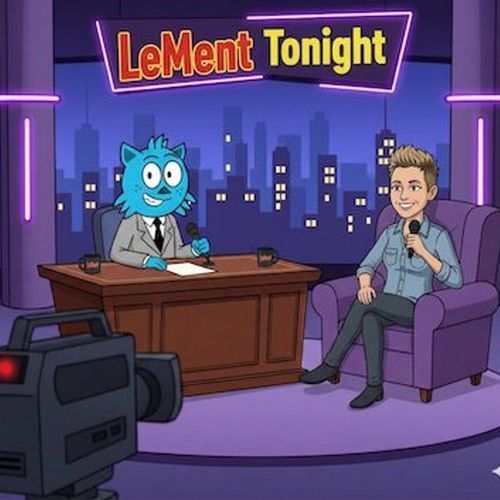
This Week Durante shares insights into her unique transition from law enforcement to stand-up comedy, noting how her experiences on the force provided a foundation for her observational humor. She also discusses the logistical realities of her time in narcotics, reflecting on the team-based nature of the work and the socioeconomic challenges of the Bronx. Beyond her career path, the dialogue veers into a freewheeling discussion covering topics ranging from the urban planning legacy of Robert Moses to contemporary politics and the history of comedy. Durante expresses skepticism toward public figures like Robert F. Kennedy Jr. and shares anecdotes about navigating the competitive New York comedy scene, including her development of a potential sitcom project inspired by her life experiences. https://youtube.com/live/wjrNOPHSYyo Bad AI Transcript LeMent Tonight. How's everybody doing? I can't believe we're already in April. Can you? Anybody? We're almost in the end of April. It's almost May. I can't believe it, but we're so glad to have tonight's guest. Michelle Durante. How are you doing? I'm actually very good. I'm good. Very good. Very good. Yeah. That's fantastic. Yeah, we were having a little chat talking about some tips to rip off Instacart. Yeah. I think that's what I'm going to call this one. Tips to get massive downloads because of it, right? Yeah, how to rip off Instacart. 101 ways to rip off Instacart. Without screwing the driver. Yeah, exactly. Without screwing Instacart, but not the little people. Yeah, yeah. So now, do you know who Jimmy Durante is? Yep. Oh, okay, because I'm sure you get that a lot, right? I used to get it a lot more. Well, yeah, he's old and dead now. Yeah, yeah, they're dying out. You know what I'm saying? Now the only thing I can say is he played Frosty on the cartoon. That's right, yeah.Yeah. Any kind of achacha. That was my achacha. That was the Jimmy Durante thing. Yeah, yeah. Oh, that's frosty. You couldn't believe it. Yeah. Yeah, that's like the saddest Christmas cartoon. Yeah. I mean, it still plays, so… I know. People know him, but they don't know him. One of those kind of things, right? Yep. Yeah. So… Let me give you a little introduction here. I know we just ran right into it, but Michelle Durante is a professional comedian, former New York Police Department detective. I better watch myself here. Who transitioned from a career in law enforcement to the stage. After graduating from the School of Visual Arts in New York City and serving as a detective in the South Bronx, she pursued her interest in stand-up comedy by attending Stand-Up University on Long Island. Wow.Her comedy is noted for its edgy observational style, which draws heavily upon her unique perspectives that she gained while on the force. Yep, on the job. Now, come on. So, I mean, were you out on the street every day busting people? What was it like being a detective in New York? I worked in narcotics, so we were out every… Single day, except when we all had court. We'd have a court day. Yeah. Because the days would line up that we'd all, we'd have to go to court. So we'd all have, we'd all have a court day. You know what I mean? But yeah, we were out there. Yeah. Oh yeah. Was it tough? I mean, that sounds horrible, honestly. It wasn't, you know, it wasn't horrible. I mean, you know, I worked with very good people and I, and we had a lot of fun. You know, the people that we locked up,For the most part, you know, they were like the hand-to-hand. You know, they were never the kilo king or queens, you know? Yeah. You know, and I remember we locked up this one guy. I locked up this one guy, two white guys, and they had a Honda, a small Honda. And I remember they came out of a building. You know, they didn't make a, they blew a red light or whatever. And we stopped them. We had the uniformed guys stop them. And so, you know, we're talking to these guys. They were from Accord, New York. And it turned out the guy had 200 bundles of heroin on him. Oh, my Lord. I remember bringing him in the back. And I said, bro, listen, this is a class A felony. This is like a murder. So I don't know if you want to help yourself out. He goes, no, I'll just take the hit. I go, okay, no problem, bro. I respect you for that. You know? So, I mean, there was things like that, that, you know, I mean, yeah.you know, you're not like you weren't there to, to, uh, you know, ruin their lives, so to speak. They were already out there doing it to them. Right. Yeah. They kind of already started that process. Right. Yeah. And you know, the guy, and we never really, you know, like the guys that would like take, they had one Sergeant that was big on taking like the guys for possession, you know, and you don't want to go with a heroin addict through withdrawal through central booking. Cause I'm going to be with this guy for the next eight hours. Right. You know? So, like, we used to let him sniff his dope, and then he'd hand the bag, and then we'd lock him up, you know, for possession that way, this way. You know? Because it's like, he's got to get his stuff, man. Wow. You know, that is very refreshing to hear. You know, you always see these things where it's so harsh and everything, and here you are, you know,Trying to be as humane as possible, given the circumstance. Yep, and I worked in Bronx Narcotics from, I think, 1996 to, like, 2007. You know, I mean, I worked there, and honestly, that's what happened. You know, that's what used to happen. Nobody, you know, there'd be, like, incidents that, you know, like maybe… you know, somebody got shot or, you know, whatever. A perp got hurt or something like that. But it was never anything, you know, like, we were never on the news. Let's put it that way. Oh, gotcha. It was all kind of just happened in day-to-day kind of stuff. Right. And plus it was the Bronx, and the Bronx is the most underserved community, you know, as far as housing. Like, it'll never be gentrified.I'm very surprised it ever gets gentrified and nor should it be because they should be affordable housing and it shouldn't be just garbage housing. Right. You know, and unfortunately the Bronx was one of those neighborhoods that was like basically disassociated and disregarded because Robert Moses built the cross Bronx expressway right through it and just tore up neighborhoods. Right. Yeah. There's a fascinating doc. It's weird. segue but fascinating documentary on, on how the boroughs yeah got divided by all the roadways and the subway and so forth. Yeah. There's a book i i forget the name of it about robert moses it's like it's like this i have it over on my bookshelf over here. I have to get the name of it, but, um, yeah, he did a lot of that. Like, that's why there was no, you know, like the parkways were just made. because if you know people from the city, they don't have cars, you know, it's stupid.Right, that's right. What are you going to do with it, right? It's just a big burden. Right, and, you know, whatever, you know, that's how he did it. Yeah, I think, yeah, he got carte blanche to do whatever he wanted, and so he's just like, okay, we're going through here, boom. He actually, in the book, it says, like, he actually, you know, then he got all these different positions, because he would, like, finagle his way in, like, see, I did this, but unfortunately… I live on Long Island and right now the Robert Moses Causeway that takes you to the bridge, to the beach is like last year. I remember me and my niece were driving and I'm like, well, I don't know about this. And like two weeks later, like pieces, some guy was out there on the great South Bay boating and he sees pieces of the bridge coming down, coming off of it. No, no, it's okay. And then, but now they're fixing it. So it's like, you know, that thing is ancient, that bridge. We got to get some spackle out here.You got to get something out there. You know who's working on that bridge. It's all the blacks and Hispanics that are working on it. All the people that he prejudiced against. Yeah. Well, that was part of the thing was he would cut neighborhoods because of their racial makeup. Oh, yeah. He was huge. Like even like when you see how when like the housing, especially in New York City, the housing projects, the way they're built, they're built like like very industrial, almost like they're brick buildings with like large iron gates around them, you know, and there's like, they're not, but they're not very like, they're not inviting you know what I'm saying? Like, it's, it's just the way it is and they get and they actually have a controversy about one of the, one of the housing projects is so bad that they want to, the tenants want to actually buy it. Yeah. And make it like they're, you know, or at least manage it themselves yeahBecause, you know, it really is like it's a shame because like, you know, they were made for people like, you know, low income. But like, it doesn't mean, you know, you have to let like they just are unbelievable. Right. Yeah. I worked with a team that we were undercover in the housing projects. We would have undercovers that actually like lived in the housing projects. Wow. And that's deep. they moved in, you know, they would set up the apartment with like pictures. And the only two people that knew was like the police commissioner and the person in charge of who gets the apartment. Cause they had to move them up on the rent list, like the housing list. Right. Right. Yeah. And then we would just do them in there and we were, you know, and it was amazing cause we would be in the Bronx and like, okay, you know, you do the takedown at three o'clock in the morning and you know,bum, bum, bum, bum, bum, no media coverage or anything. And, you know, because you don't want them to be able to notify their friends. That's right. You don't want word to get out. And so funny is like, I might
44m · Apr 24, 2026
© 2026 Spreaker (OG)