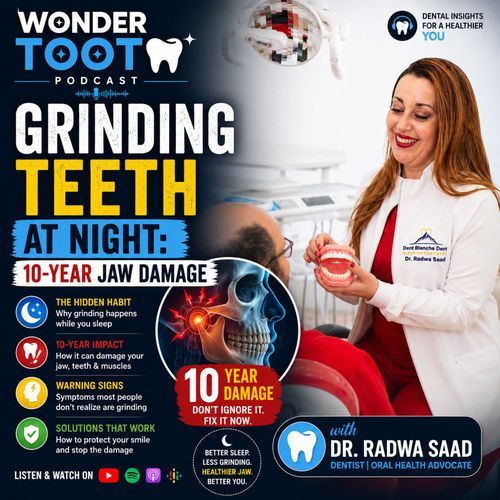
Grinding Teeth at Night: 10-Year Jaw Damage
Episode · 0 Play
Episode · 37:46 · May 13, 2026
About
Grinding Teeth at Night: 10-Year Jaw Damage You Can’t IgnoreWhat Happens If You Grind Your Teeth at Night?Grinding your teeth at night—known as Bruxism—is one of the most destructive habits affecting your oral health today.Most patients don’t even realize they’re doing it… until the damage is advanced.If left untreated, nighttime grinding can permanently affect:Your teethYour jaw jointsYour facial structureYour overall healthAnd over a 10-year period, the consequences can be severe, expensive, and sometimes irreversible.The Hidden Force Behind Teeth GrindingWhen you sleep, your body should be resting.But in patients with bruxism, the jaw becomes highly active—generating forces far beyond normal chewing.These forces:Wear down enamelCrack teethStress the jaw jointsTrigger muscle inflammationOver time, this leads to a breakdown of your entire oral system.The 10-Year Timeline of Teeth Grinding DamageYears 1–2: Early Warning SignsMild tooth sensitivityOccasional jaw sorenessMorning headachesAt this stage, damage is subtle—but already beginning.Years 3–5: Structural Changes BeginFlattened teethSmall enamel cracksJaw clicking or poppingPatients often ignore these signs… which allows progression.Years 5–7: Noticeable DamageTeeth appear shorterIncreased sensitivityGum recessionJaw discomfort becomes frequentNow your smile begins to visibly change.Years 7–10: Severe BreakdownTooth fracturesFailed crowns and fillingsChronic TMJ painFacial shape changesAt this stage, treatment becomes complex and costly.How Grinding Affects Your Jaw (TMJ)Your jaw joint—called the Temporomandibular Joint—is one of the most delicate joints in your body.When you grind your teeth:The joint becomes compressedCartilage can wear downInflammation buildsCommon TMJ Symptoms:Clicking or popping soundsJaw lockingEar pain or pressureChronic headachesNeck tensionIf untreated, this can evolve into long-term TMJ disorder.Signs You Are Grinding Your TeethMany patients are shocked when we diagnose them.Here are the most common signs:Flattened or worn teethCracked enamelTooth sensitivityTight jaw musclesScalloped tongueGum recessionIf you notice even one of these, it’s time for an evaluation.Why a Night Guard Is CriticalA custom Dental Night Guard is the first line of defense.Benefits of a Custom Night Guard:Protects enamel from wearAbsorbs grinding forcesReduces jaw pressurePrevents fracturesPreserves dental workImportant:Over-the-counter guards can actually worsen your bite and increase grinding.At Dent Blanche Dental, we use digital scanning technology to create precise, comfortable guards tailored to your bite.Advanced Bruxism Treatment OptionsBruxism is not just a dental issue—it’s multifactorial.That’s why we take a comprehensive approach:1. Custom Night GuardsPrecision-designed for protection and comfort2. Bite AdjustmentCorrecting uneven pressure points3. Botox for Jaw MusclesRelaxes overactive muscles and reduces grinding intensity4. Orthodontic AlignmentUsing clear aligners like SureSmile to correct bite issues5. Stress ManagementAddressing underlying triggersReal Patient TransformationOne of our patients came in with:Severe tooth wearChronic jaw painRepeated crown fracturesWe performed:Full digital smile designBite reconstructionCustom restorationsNight guard protectionResults:Pain eliminatedTeeth restoredFacial balance improvedConfidence regainedThis is what happens when you treat the cause—not just the symptoms.Long-Term Risks of Ignoring Teeth GrindingIf untreated, bruxism can lead to:Tooth lossGum recessionTMJ disorderExpensivefull-mouth reconstructionFacial aging and collapseEarly intervention is always simpler—and more affordable.Why Choose Dent Blanche Dental?At Dent Blanche Dental, we provide elevated dentistry using:Digital scanning & CAD/CAM technologySame-day restorationsCustomized treatment plansLuxury, spa-like environment Princeton, NJ & Fifth Avenue, NYC https://dentblanchedental.com 609-890-1888Frequently Asked QuestionsIs teeth grinding dangerous?Yes. Over time, it can cause permanent damage to teeth and jaw joints.Can grinding change my face?Yes. Chronic grinding can enlarge jaw muscles and alter facial shape.Do I need a night guard?If you grind your teeth—even mildly—a custom night guard is essential.Can TMJ go away on its own?Sometimes symptoms improve, but underlying damage often progresses without treatment.Final ThoughtsGrinding your teeth at night is not harmless.It’s a silent, progressive condition that can reshape your smile, damage your jaw, and impact your quality of life.The earlier you act… the better your outcome.
37m 46s · May 13, 2026
© 2026 Captivate Audio Ltd. (OG)