About
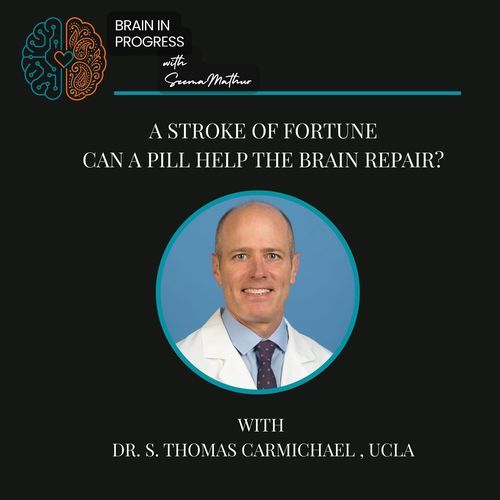
Seema Mathur sits down with Dr. S. Thomas Carmichael—neuroscientist, neurologist and Chair of Neurology at UCLA—to explore a question that could change stroke recovery: What if a pill could help repair the brain?Stroke is a leading cause of adult disability, and even with intense therapy, many people never fully regain movement—especially in the arm and hand. Dr. Carmichael explains neuroplasticity and the brain’s “sensitive period” after stroke, when the brain is most open to rewiring. He then shares the science behind a surprising target: a receptor called CCR5, which becomes highly active after stroke and can lock down the brain’s ability to form new connections. His team is studying whether blocking CCR5—using a drug originally developed for HIV—could help “reopen” plasticity and strengthen recovery.Seema also reflects on her own experience with neuroplasticity and what it means to fight your way back—one repetition at a time.In this episode:Why stroke recovery is often limited—even with rehabWhat neuroplasticity really is (and what it isn’t)The brain’s post-stroke “sensitive period” and the window of opportunityCCR5: the molecule that may limit recovery by locking down connectionsWhy an FDA-approved HIV drug is now in clinical trial for stroke rehabilitationWhat researchers hope to improve most: meaningful arm and hand functionIf the treatment could be extended to multiple variations of traumatic brain injury Hosted on Acast. See acast.com/privacy for more information.
24m 38s · Mar 10, 2026
© 2026 Acast AB (OG)